
Not within Russia, at least, currently.

However, I can recall Boris Nemtsov from the recent past; once, in the late 1990s, he was Boris Yeltsin’s would-be successor.
Boris Nemtsov was a physician who started his political career in his early 30s when he was elected governor of Nizhny Novgorod, a large city in European Russia. Boris Yeltsin liked him as a bright new voice in Russia and probably the one who could carry his torch after he resigned. In 1997, Yeltsin invited Boris Nemtsov to be vice-premier of the Russian government. At the time, he was Russia’s most popular politician, representing a pro-democratic trend.
Yet, Nemtsov was very straightforward and was never afraid to argue with Yeltsin, telling him unpleasant things face to face. Protesting against the war in Chechnya, he collected 1 million signatures – offline – and put the papers on Yeltsin’s table, infuriating Russia’s first president. By the late 1990s, the Russian political establishment unified against Nemtsov to kick him out as Yeltsin’s possible successor. There was a noisy media campaign aimed at throwing him out of the government. Finally, Yeltsin turned away from him.
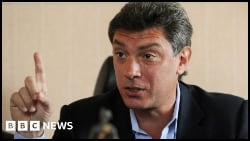
The problem with Boris Nemtsov was that he was never corrupted or engaged in any fraudulent activity. He has never done shady business with Russian oligarchs. I mean, nobody could unveil any information to manipulate him by possible criminal cases or something of this kind.
Back then, just like now, anybody must have hidden corruption cases or even more severe crimes to get promoted and be a puppet to the Russian Deep State as a formal #1 guy. This is how somebody known as Vladimir Putin emerged after Nemtsov’s dismissal.
Nemtsov was then elected to the Duma, the Russian parliament, as head of a pro-democratic faction. Then, he was marginalized by the Kremlin as they still perceived him as a strong potential competitor to Putin. In the 201os, Boris Nemtsov was organizing mass pro-democratic rallies in Moscow when it was still possible. He condemned the Crimea annexation and openly called Putin a criminal who would lead Russia to a catastrophe.
On February 27, 2015, Boris Nemtsov was shot five times just outside the Kremlin during a walk when he was returning home, not far away. By accident, the Kremlin surveillance cameras didn’t work that day. The investigation started anyway, but weeks later, the investigators couldn’t arrest a Chechen suspect in his home in Chechnya. The reason? The investigator’s team said the suspect didn’t open the door when he was ordered to do so. So, they had to go away.
In 1996, Boris Nemtsov gathered a million certified voices across Russia to stop the war in Chechnya.
In 2015, he was killed by a group of Chechen former military, who, as even the investigators admitted, didn’t know him personally and had no conflicts with him.
In 2015 and later, rumors spread across Russia that leaks led to the very top in the Kremlin.
Do we know an honest politician?

Back in the day when I was a fledgling presenter at BBC Radio Jersey, I used to report on issues concerning the government of that tiny jurisdiction. The population at the time was 90,000 (all alcoholics, clinging to a rock….) and there were 52 politicians, all independents, to represent the people.
So, while I felt most of them were not particularly dishonest, they didn’t really have to be. They could all promise to deliver utopia to the masses, but each of them knew that for their policies to come into being, they would have to convince 51 others, not just one other party. Unlikely at best, and thus basically, very little ever got achieved. I don’t know the situation today, as it’s a long time since I was a resident, and now I simply don’t give a damn.
In the real world, the answer to the question is simply “No”; I don’t see how you can be a successful politician and remain honest. It doesn’t work that way. You see, democracy will obviously reward people who are able to get more votes, but won’t necessarily reward people who get votes by being honest.
OK, here’s an example. Two candidates are equal in every measure, and can’t be separated. One, who is prepared to lie, suddenly announces, shortly before polling day, that their opponent eats cats and dogs belonging to residents of their area. (I know this is a stupid example, because that kind of slagging off would never happen in real life………). The honest candidate denies it, but there’s no time to vet the vicious claim. A few voters don’t accept the denial, and the dishonest candidate wins the election.
It gets worse, because undoubtably fear is much more of a motivator than mere hope. If you can make your constituents horrified and alarmed at what your opponent might inflict on them, it will surely pay for you to lie, cheat and invent all kind of horrors. Just load your speeches with popular conspiracy theories that will reinforce the ignorant voter’s false narratives, and you will soon be in charge.
In the U.K., lies and falsehoods resulted in Brexit, the worse thing to ever happen to my country in peacetime. Lying and cheating also brought down the corrupt Tory government this very year, though it took 14 years to get rid of the bastards.
In conclusion, if you’re not dishonest, you have no chance of victory, but well done for trying. Your next job will be trying to find a serving politician who isn’t bent. Good luck with that.
Do we know an honest politician?

In the US it was a slow slide. If you go all the way back to the 1960s, a president never lied. In fact, I think I have mentioned here before that I read the White House actually prevented Dwight Eisenhower from appearing anywhere the press could shout a question for weeks. That’s because the Soviets shot down Gary Powers and a lie had to be told about the incident. As no president could lie, then Eisenhower had to be hidden.
According to the Washington Post, Donald Trump made “30,573 false or misleading claims during his presidential term.” I suppose I’m really old, I always called them lies. Today we say mis-spoke or mis-remember; in my mind, he is a liar. That’s not a partisan statement, Bill Clinton also lied. I suppose the others did too, they just didn’t offer pallet load discounts.
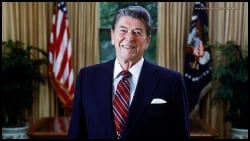
The last president I think probably didn’t lie was Ronald Reagan. I’m not even entirely sure of that. I liked him. Even though I didn’t agree with most of his policies, anyone could understand how he arrived at a decision. He had a moral compass that wasn’t going to change with the latest polls. During his second term, you could have asked me any question and I could tell you what his policy would be on that subject. He had a belief system that wasn’t negotiable.
It’s not that I think that Joe is a liar, it’s just that today, politicians tend to tell lots of half-truths. When I was a kid, a lie by omission was still a lie. So now you get these things like a politician saying how low the unemployment rate is and accidentally forgetting to mention that most new jobs don’t offer a living wage. Did he lie?