
My biggest fear for Russia

I worry that the current trend of ultra-nationalism and authoritarianism will continue even after Vladimir Putin’s departure.
I think I understand how it works. Just very similar to what happened in Germany after the Weimar Republic. Hurt pride, desire for revenge, all this crap that perfectly fits today’s Russia.
Putin is a man of the Soviet yesterday and his generation would feel something like this: a nostalgia for the might and stability of the Soviet Union. It didn’t work with me because the USSR in the 1980s wasn’t cool at all, with its total food and goods deficit and lack of belief in the state ideology.
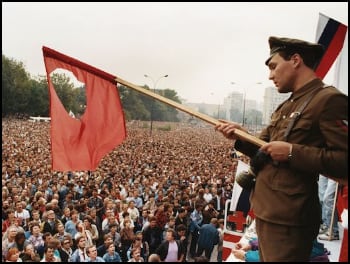
The Soviet Union failed in 1991, somewhat suddenly for everyone, but for a good reason. Nobody wanted to live in a country like that, from the Muscovites to Ukrainians to Estonians and even Central Asians. Failed ideology, non-working planned economy, an epic fail in everything.
So, in December 1991, I was 17 and I remember it perfectly well; there was a feeling that the fundamental change was happening right away and I was embracing the future. It might have seemed uncertain but, for sure, it looked better than the depression of the USSR’s dying years.
Let me make it clear: in December 1991, I didn’t lose anything. I won big.
My feelings about a brighter future didn’t betray me. To me, the contradictory 1990s were, arguably, the best time in my life. I finished school, became a student, then a foreign exchange student in the USA. Then, I started to work in the advertising business and it went just great. The world was wide open and it looked very attractive. I had opportunities I couldn’t even dream of in the dull and fearsome Soviet Union. And the bottom line of it was freedom and openness. Russia was fast turning into what people of my generation used to mark as ‘a normal country.’ It was a natural lifestyle.
Well, to some of the older generation, like Putin, such a transformation was a disaster, even though people like him might have been personally successful in the new reality.
Now, this soon-to-be-gone generation uses Goebbels-style propaganda and brutal power to intoxicate and frighten its own people. They are trying hard to prove that refusing to be, ultimately, a part of the West and having China, Iran and North Korea as allies is the distinctive Russian way. Add the absence of political freedoms and repressions, and enjoy this toxic brew!
Hell no!
This is where my biggest fear comes from: that under Putin – and after him – Russia would continue as it is now – a country both hostile to its own citizens and the outside world. A bipolar country that is both afraid of the developed world and, at the same time, feels some, yet to be understood by me, superiority towards the West.
I believe this is not natural for Russia and after Putin big changes will happen fast. On the other hand, from history I know that Communist dictatorship was not something inevitable for Russia in 1917. It took Lenin and Trotsky’s ruthlessness and a bloody Civil War to make people accept it.
I can only hope that both ‘the ruling circles’ (I won’t call them ‘elite’) and the Russian people will learn from their hard and painful history. I can only hope that after Putin we would be experiencing something that happened right after Stalin’s demise in 1953.
And I know that I am not alone in this.
My biggest fear for Britain

I know that when we look back in time, things often seem better than they actually were, despite that not necessarily being the case. Nostalgia has a habit of putting a gloss on the past. Nevertheless, I would dearly love to see a Britain that had a little more in common with the country my parents knew.
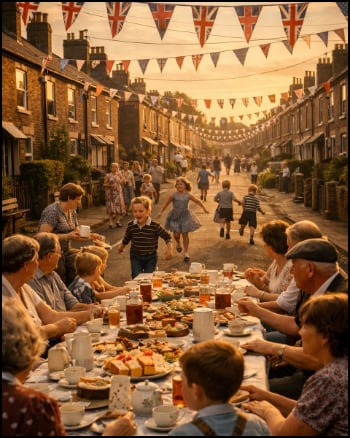
A time when children were encouraged to play outside, even on their own, without parents constantly worrying about their safety. When drugs and crime weren’t such prominent features of everyday life. When you actually knew your neighbours and looked out for each other. When greeting a stranger was perfectly normal. Imagine that!
Clean streets, because people took pride in where they lived. Wages that could support a family, a properly functioning NHS, and a general feeling of optimism about the future. A time when people weren’t constantly being encouraged to see race, culture and identity as reasons to divide themselves.
Britain seems to be losing so much of that. We have become a deeply divided country, where one half appears to despise immigrants, blaming them for practically every ill in society. The other half recognises that Britain would struggle to function without immigration, and that immigrants make a substantial contribution to our economy, often giving far more than they take out.
Politically, we are bereft of meaningful choice. We had a Conservative government that seemed increasingly disconnected from the needs of ordinary people, an opposition party whose most memorable characteristic was its ineptitude, and now we face the prospect of being governed by a bunch of charlatans, for whom the politics of division and the targeting of minorities appear to be perfectly acceptable tools of the trade. Racism, it seems, is no longer something to be embarrassed about.
My greatest fear is that this decline in standards, social well-being and simple human decency will continue. That suspicion will replace trust, that disagreement will become hatred, and that the divisions we see today will become even harder to bridge. We risk becoming a country where people no longer recognise anything they have in common with one another.
Perhaps I am guilty of looking at the past through rose-tinted spectacles. Perhaps every generation thinks the country is going to the dogs. But I don’t think that makes my concerns any less real.
I weep for a British way of life that is no more.
My biggest fear for America

On the weekend before Tuesday, November 3rd, we want to ask an American about the biggest fear for his country. Golly, nothing much comes to mind.
No, I’m not finished being a smart-ass but I can set that aside for a few minutes. I think that thirty years from now, Trump will be seen as a catalyst. Of course, he wants to be remembered as the agent of powerful change. He will be successful in that quest, just not in the way he wanted. He’ll be hated by brown people and children who have been raped and speak out. He’s the champion of oligarchs and racists. That’s not a legacy I seek.
I’ll argue that will not be Mr. Trump’s actual contribution to the future. He has brought millions, no, tens of millions of docile Americans into the lands of political activism. Trump will not be remembered as the father of universal healthcare in America. Yet, he is absolutely the force that brought it to the forefront.
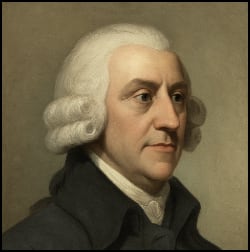
Fire burns but it can also cleanse. The simple fact is that Adam Smith capitalism as an institution is feeble, rickety and no longer works for most people around the world. Yet, about one third of the population in America cling to its principles – passionately. Mr. Smith was born in a different world.
A dear and much-loved old friend of mine from greater Boston (I’ll call him Doug because that’s his name), posts things about Socialism on Facebook. Doug doesn’t seem to get too excited about the differences between Socialism, Democratic Socialism, and Communism. He, like tens of millions of other Americans, can thank Fox News for that. If you were to say RINO and MAGA to Doug, I’m sure he would see serious differences and think it no small distinction.
Now we see more than a few Democratic Socialists on the cusp of winning seats in Congress. Count on Fox to declare them Communists. Count on Doug to worry about the future of his nation (rightfully). Fox will not remind Doug that when the Tea Party had a couple of dozen members in Congress, Democrats didn’t attack them personally— at least not as party policy. This will be declared the absolute end of our civilization before Fox and NewsMax are finished.
I will argue that, in the end, Trump did a service to the United States. He forced a long-sleeping giant to really look at itself. He brought people to the polls. He put Democratic Socialists in power. And maybe, just maybe, he built a Ballroom.