
How did America report Artemis II?

Finally, after an entire month of nothing but bad news: Artemis II. All the childish insults and goofy antics are certainly not behind us. But, even if only for a couple of days, it was nice to see a Canadian and American flag side by side. I’m sure that will not happen again for a while and to be honest, I’m very much pro-Canada and pro-democracy in the ongoing insult fest.
Of course, the capsule was barely back on the ground when the bad news party started again. The administration wants to cut 23% from NASA’s budget. These cuts will end 41 science missions. It sounds like some in Congress plan to add the money back into the budget. This is a big story in part because of the poor timing of the announcement. Maybe you should have let the capsule dry off first.
One constant theme in the press has been about how missions to the moon fail after so many years and so much progress in technology. This has been debated over the past two years whenever something happens to one of these small landers. There seems to be agreement that small robotic landers should have a high success rate on even first missions.

My understanding is that only about half the Surveyor missions made it. These landers had no real computers and little guidance. They just plopped down wherever and hoped for the best. The big, flagship NASA missions today have a success rate close to 100%, no matter the target planet or moon. Small, private companies by contrast, don’t have the budgets, experience, or engineering teams a government has and the difference shows. Some in the press haven’t hesitated to call all these missions failures. I would disagree; these small companies are not far off where the US Government was pre-Apollo. Mostly fail, learn, and fail some more.
There’s another difference; the Apollo program introduced a whole string of new technologies – Artemis, not so much. Yet the program enjoys wide support (by polling) with the American public. It’s the human stories that resonate. Yeah, velcro is great but not that relatable emotionally. That’s not a robot, it’s one of us… and that makes all the difference.
How did Russia report Artemis II?
With jealousy.

The Soviet Union lost the moon race to the United States back in the 1960s. Moreover, even before the December 1968 Apollo mission that made exactly what Artemis II did now, i.e. circling the Moon, the USSR had no chance.
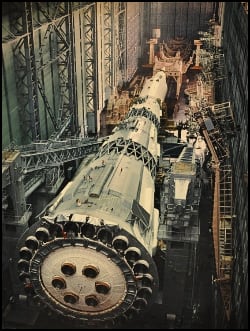
Why? They couldn’t build a reliable vehicle. Unlike the mighty Saturn 5, their N1 rocket failed basically every test, with explosions and no time to rectify things.
So, months before the Apollo 11 launch, the Soviets could only helplessly watch the American success story. Well, they switched to automatic exploration and later declared that it was the only goal (fake!). Thus, they tried to save face after their devastating defeat in the moon race.
Under Putin, Russia has been developing a number an ambitious Moon exploration missions which, again, all failed. Roscosmos, the Russian space agency, has gotten plenty of money only to turn them into waste. Instead, somebody has probably bought a villa in Spain, or something like that.
In fact, Putin’s Russia did lose not to just America. China, plus India, and Japan, are now developing more advanced moon exploration programs, compared to Russia. The Luna 25 probe crash-landed on the Moon, sending a signal of a 100% failure. Well, the Luna 25 mission was just a clone of Luna 24 probe that landed successfully on the Moon back in the 1970s. Now, they couldn’t repeat the 70s tech level.
That is for you to understand the actual status of Russia’s Moon program degradation.
They fucked it up. Instead, they fight in the Ukrainian steppes. With the same outcome.
So, Russian media have been very moderate mentioning the NASA success, trying to mention a potential Chinese competition as a counter balance. Well, China is not Russia, they have their own mighty Moon program, not even 1% connected to Russia, and Russian propaganda should know it well.
Well, they don’t. Until America lands on the Moon and starts building bases there, they would keep on whining that another lavatory system is out of order onboard the Orion spaceship. Ha-ha!
I feel ashamed about it. The mighty Soviet space heritage has been destroyed by corruption and lack of professionalism.
How Britain watched us return to deep space

For the first time in over half a century, humans travelled beyond the Moon—and, for a moment, Britain stopped to watch.
On the day the Artemis II astronauts reached the most distant point from Earth ever achieved by a crew, the story led the BBC’s 6 o’clock news bulletin. In a month dominated by war and economic uncertainty, it was striking that a space mission took top billing. Yet it felt entirely appropriate; it was a reminder of what humanity can do at its very best.
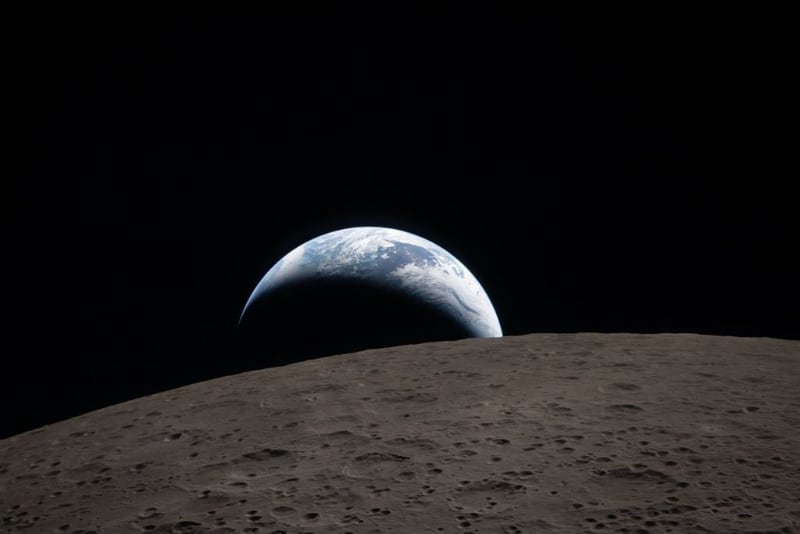
Not since 1972 have astronauts ventured beyond low Earth orbit, and here they were again; the unforgettable sight of Earth hanging in the blackness of space, shared instantly across the world. Not just scientific milestones but profoundly human ones.
British coverage captured that sense of awe. The tone was not analytical or political, but reflective and, at times, almost reverential. This was a story about human achievement, international cooperation, and the enduring urge to explore. That it displaced more familiar dour and profoundly frightening headlines spoke volumes about its impact. For once, the news agenda made room for wonder.

And yet for me, watching Artemis II, it is impossible not to look back.
More than fifty years ago, the Apollo missions achieved feats that remain almost beyond comprehension. Using technology that now seems impossibly primitive, astronauts navigated to the Moon, landed on its surface, and returned safely to Earth. The onboard computers had less processing power than a modern smartphone. Engineers relied on slide rules, handwritten calculations, and systems that would today be considered rudimentary. And still, they succeeded.
That is what gives Artemis II an added depth. If Artemis represents the future, Apollo remains a testament to just how extraordinary the past truly was.
Perhaps that is why this mission resonated so strongly in Britain and beyond. For a few minutes on the evening news, viewers were invited to look up, rather than inward—to consider not what divides us, but what we might achieve together.
On that evening, as the BBC led with images from a quarter of a million miles away, Britain was reminded of two things: how far we have come, and how remarkable it was that we got there at all.
Artemis II may point to the future—but it also quietly reminds us that the past was even more extraordinary than maybe we remember.