
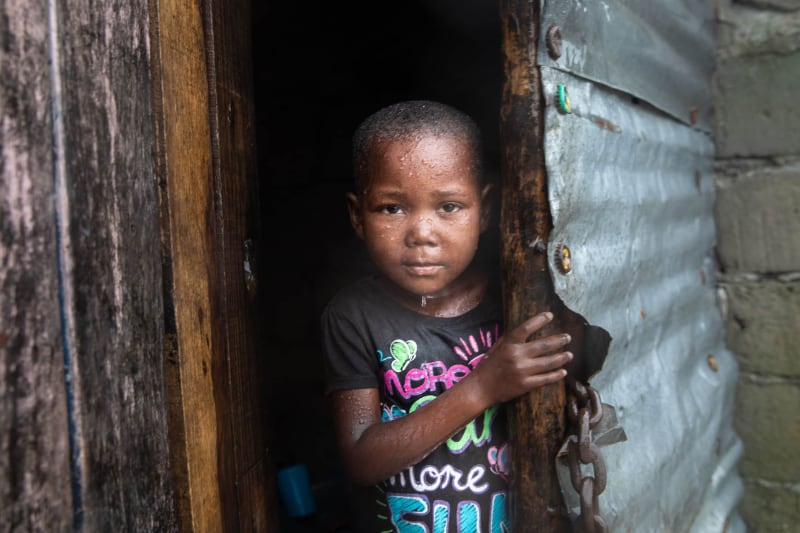

At first glance, the answer seems obvious. For most of human history, life was little short of dreadful.
For over a thousand years, our ancestors endured lives that were hard, dangerous and often remarkably short. Infant mortality was commonplace. A simple infection, a rotten tooth or a minor injury could prove fatal. Many people never reached what we would now consider adulthood, and those who did faced lives of relentless physical labour with little comfort and even less security.
Even in Britain, within living memory, life was far from easy for ordinary people. Until well into the twentieth century, long working hours, low wages, poor housing and limited healthcare were the norm. Retirement, if it happened at all, was often brief. The wealthy lived comfortably, of course, but for most families life was a struggle.
Surely, then, the future had to be better than the past.
After the Second World War, that certainly seemed to be the case. Having survived five years of unimaginable conflict, Britain emerged battered but optimistic. Within a decade the economy was growing strongly. The National Health Service offered healthcare regardless of wealth. Wages rose. Working hours fell. Home ownership increased. Technology advanced at a breathtaking pace.
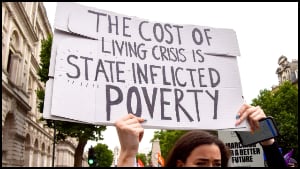
For a generation growing up in the 1950s, 60s and early 70s, the future looked irresistible. Each year seemed to bring new opportunities, new inventions and greater prosperity. There was a widespread belief that our children would live better lives than we had, and their children better lives still. So, what could possibly go wrong?
Yet here we are in 2026, and for the first time in my life I find myself questioning whether the future really will be better than the past.
For generations, children could reasonably expect to earn more than their parents and enjoy a more comfortable retirement. Today that confidence has been shaken. Pensions are steadily eroded. Retirement ages creep ever higher. The years available to enjoy retirement seem to grow shorter.
Many young people are struggling. My own children, like millions of others, have benefited from the so-called Bank of Mum and Dad. Something that was once achievable through hard work alone has become increasingly difficult.
But my greatest concern is not financial. It is the state of the world itself.
Environmentally, we continue to drift towards problems that scientists have warned about for decades. Politically, the world often feels more unstable than at any point since the Cold War. Conflicts multiply, international cooperation appears fragile, and too many leaders seem driven more by personal ambition than by the welfare of those they serve.
Perhaps most worrying of all is the growing tendency for people to believe whatever confirms their existing views, while dismissing inconvenient facts. A healthy democracy depends upon informed citizens. That becomes difficult when truth itself is treated as optional.
When I left school in 1970, I felt genuine excitement about the future. There was a sense of peace, progress and possibility. I believed, as many of us did, that each generation would inherit a better world than the last.
Today, I look at my children, grandchildren and even great-grandchildren and find myself wondering what sort of future awaits them. It is not a comfortable thought.
And yet, despite all my concerns, history offers one important lesson. Every generation has faced challenges that seemed overwhelming at the time. Wars, depressions, epidemics and social upheaval have all threatened to derail progress, yet humanity has repeatedly found ways to adapt and move forward.
Perhaps that is the hope I should pass on to those who come after me. The past was not better. In many ways it was far worse. The question is whether we have the wisdom to ensure that the future is better than the present.
Right now, I am not convinced. But for the sake of those who will inherit the world after us, I sincerely hope that I am wrong.
Could the Past Be Better Than the Future?

I was born and grew up in Russia, and like many people of my generation, I carry vivid fragments of the Soviet past. Some of them are warm and sweet. Others are simply proof that nostalgia can be dangerously selective.
I remember the small hometown of my parents, Usman. There was a street stall that sold hot fried pies with jam — пирожки. One summer day in 1983, right after I finished third grade, a group of us ran to the centre of town, full of excitement and pocket money. The stall was gone. Just empty space and that sharp, childish feeling of oблом — bitter disappointment. The pies had disappeared as suddenly as they had appeared in our lives.
That little story sums up a lot about the late Soviet 80s for me. It was not a terrible time in the dramatic sense, but it was mediocre, grey, and unreliable. Shortages were normal. Quality was poor. And pleasant things felt accidental rather than guaranteed.
There was one bright exception I still remember clearly: the 1980 Moscow Olympics. I was very small, but my father took me to a basketball match — USSR vs Yugoslavia. The Soviet team played in red, the Yugoslavs in blue. The atmosphere was electric. For a short period, the authorities opened the country just enough to fill the shops with Western goods, mostly from Finland. Suddenly there were real juices on the shelves — orange and cherry. To a Soviet child these were almost mythical drinks. I tasted them and understood that somewhere out there, life could taste different.
And yet, even with these colourful memories, I have zero desire to go back.
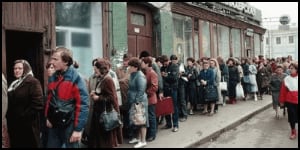
The Soviet Union of the 1980s was “so-so” at best. Shortages, lies, stagnation, and a constant low-level anxiety that tomorrow might be worse. The pies could vanish. The good juices would disappear again. The system itself proved it could not deliver consistent dignity or abundance.
Memory is kind. It keeps the taste of warm jam pies and the excitement of an Olympic summer, while gently blurring the endless queues, empty shelves, and the quiet knowledge that you were not truly free.
But the future is where hope lives.
I choose hope over nostalgia.
Could the past be better than the future?

In my country, the answer is absolutely yes. For the very first time in the country’s history, life expectancy is shorter for the next generation. Suicide is up among the former middle-class. Today, most make little money and have no money. But look at the bright side: Elon will be the first trillionaire!
The current President is not the most serious threat to society; I will argue AI is. First of all, that bubble is going to take a big hunk of the world economy down with it and these damn tech bros will demand the tax payer be held responsible for the billions they lost. Trump will most likely agree.
I remember the Dot Com bubble and the Internet didn’t go away just because the rich invested in companies that never made one penny. AI will be the same but worse: we will be required to pay for it but AI is still going to take your job away.
There’s another possible path. If Trump can’t steal the mid-terms, it’s entirely possible he will be impeached, again… and maybe again. IF (and it’s an if) he has taken as much money as seems plausible, then maybe the MEGAs will snap out of it. You could see the rich start to pay taxes, you could see morals in politics, if you want to really get crazy, maybe the Supreme Court would even start to interpret the law instead of making shit up.
In this future, tomorrow could actually be better than yesterday. There are several ifs in there but every day, the thought of a moral and just future becomes more possible. The Republicans will almost certainly lose control of the House and the Senate is now in play. If (I keep using that word) enough politicians are thrown out, perhaps the ones left will actually stand up to the rich.
The general population will require some sort of stipend or guaranteed income. That’s currently not the plan. I honestly don’t think the rich give a damn what happens to the nation or it’s people.
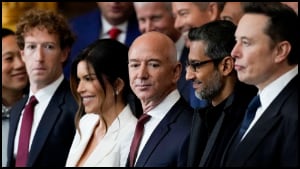
Elon wants to build billions of robots. That’s an insane number. Let’s say he fails to achieve even one-tenth that number and is only able to create a few dozen million, it really doesn’t matter, the economy will not be able to provide jobs for the people displaced. If people have no food, Musk, Bezos, Zuck, and Co. could find their lives quite interesting.
I believe the future could be amazing and bright but it’s just as possible the future is a dystopian hell. If (there’s that word again) the people don’t take charge, the new robber barons will, and I guarantee you they will have little interest in luxuries like food for you.