

America and air-con….

Every week on Wednesdays, we have a video call where we decide what that week’s topic will be about. I log-in and see both Sergey & Roger sitting there with no shirts on. That’s a first. Then there’s this conversation about how hot it is… and yeah, it’s crazy hot everywhere now.
That brings up a conversation about air conditioning. This whole thing seems a little odd to me. It’s simply not possible to purchase a house or a car in the US without AC. I didn’t really know that was a thing in the UK. Then Roger pipes in with “even your stadiums are air conditioned.” What the hell, does he think we are animals? Yes, all domed stadiums will have air. Moo.
Many warm weather countries have siestas, a mid-afternoon break where everything closes until about five. The last place I was in with siesta was Italy and I never got used to it. The whole idea of a grocery store saying: “screw it, it’s hot (outside!) so were going home” is completely bonkers to an American. This was the first of several HARD lessons I had to learn about just how crazy American priorities are. Once you see the planet, you realize we are suckers and chumps for the man. Don’t show up for work at 9:05 or you’ll be written-up.
The next complaint was that our electricity is so cheap. I explain that every river in America has multiple dams. Basically, free power once you have built the dam. It’s also true that traditionally, coal has been a major source of electricity production. The US has far, far and away the biggest coal reserves in the world. Up until the last decade or two, that has also served to hold down the price of electricity which makes air conditioning affordable. Today, coal accounts for 9.8% of power generation.
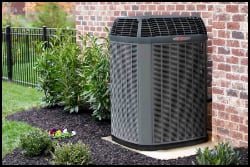
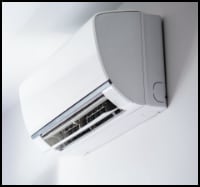
The way we air-con our houses is also different. The rest of the world has these systems where each room has its own unit. A two-part affair with half outside and half inside. There’s a small pipe and power running through the wall to the outside. This style is not even available in the US. All buildings have large, central units hooked to ducts that run under the floor or through the ceiling. There is a central thermostat that controls the entire home. Your bedroom, for example may have two vents in the ceiling and a return vent in the floor. You change a single, large filter maybe once a month. These heat pumps are quite energy efficient and the latest models are supposed to be outstanding. By the way, the only difference between air conditioning and heat is in which direction the heat pump is running.
If you live in the deep South, air conditioning is not some nice to have luxury. People will die without it. There are drawbacks of course. For example, when air conditioning was installed in the US Capitol, Congress started staying in session during the summer and they began passing many more laws. A/C changed the nature of the Federal Government.
The Americans (Willis Carrier) invented air conditioning and one of the first places they used it was in the US Navy. Remember, steam ships were burning tons of coal in huge boilers. The boilers were fed coal by shovel. It was brutal, hard labor and it was normal for firemen to need to be changed out and many suffered from heat stroke. With some cool compartments (mess hall) and refrigerated cool water, these men could work longer, harder, and without passing out. The US Navy benefited because of refrigeration/air conditioning.
Britain and air-con

Pairing the words Britain and air-con would have seemed rather illogical only a few years ago. Our schools, hospitals, care homes and most of our houses have always been equipped to keep us warm through winter, but until recently that was all we needed. When summer arrived, our best defence against the heat was to close the curtains, pull down the blinds and hope for a breeze.
I’m well into my seventies, and I can remember only one truly exceptional British summer: 1976. It was blisteringly hot, gloriously long and, we all assumed, a once-in-a-lifetime event.
Or so we thought.
As I write, Britain is enduring its third heatwave of the year, and the country is simply not designed to cope. Hundreds of people are likely to become seriously ill, and some will die from heat-related causes—not just this summer, but quite possibly in the years ahead. Unless governments start treating climate change, and its consequences, with the urgency they deserve, these summers will become the new normal.
The problem is obvious. Buildings that were designed to keep heat in will increasingly need to keep heat out. Britain’s own climate advisers have warned that air conditioning and other cooling measures will become essential in many settings. But adapting to a warming climate comes at a considerable cost. One recent estimate suggests Britain will need to spend around £11 billion every year, shared between the public and private sectors, simply to prepare for what lies ahead.
Then there is the cost of actually using it.
Britain has some of the highest household electricity prices in Europe, while, as Dean will no doubt point out, Americans typically pay around half as much for their electricity. It is hardly surprising that they think nothing of cooling an entire house, while many Britons glance nervously at the smart meter before daring to switch on even a portable air conditioner. We still tend to regard air-con as an unnecessary luxury rather than an increasingly necessary appliance.
My greatest concern, however, is not the heat itself but our failure to prepare for it. If governments continue to drag their feet while climate impacts become more frequent and more severe, they risk creating exactly the conditions in which populist politicians thrive. Public frustration over inadequate preparation could easily be redirected against climate policies themselves, rather than against the failure to act in time.
Looking across the Atlantic, I can’t help wondering whether Britain is about to repeat mistakes that are already becoming all too familiar.
Russia and Air-Con

On August, 29, 1993, I, a foreign exchange student, after spending two weeks at Middlesbury College in cool and green Vermont, touched down at Dallas-Ft. Worth airport and… immediately had one of the most memorable experiences in my life.
I couldn’t imagine that such heat – and humidity – could ever be!
Hot humid air, with temperature around 35C and higher. Hell on Earth!
I knew, theoretically, that Texas was a hot place, but you had to try it to feel how really bad it could get.
This is how I found out, first: air-con exists. In the USSR/Russia back in the day people didn’t know what it was. No AC at homes. No cars equipped with AC. Second: you can’t go on without it in places like Texas. Much later, I found out that the very same temperature levels and humidity, also in August, are present in Tokyo. Well, that time, I was ready, after a year in Texas. Still, it was pretty hard to sleep because in Japan, for the sake of saving energy, the home AC system was constantly turning off and on. The moments it was off, like a 15-minute interval, were hard to survive.
Back to the Lone Star state. Everything was air-conditioned there. I remember walking back to my dorm in September at Baylor University. Stepping inside the building was almost like diving into a pool filled with cold water. An instant relief and dramatic change compared to the hell outside. Life is too short not to live it as a Texan!
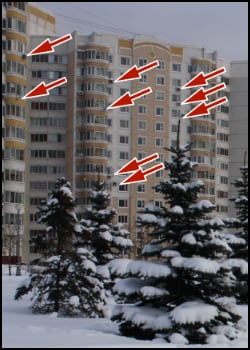
In today’s Russia, I think, only modern residential buildings enjoy built-in Air-Con facilities, just like central heating. If you live in an older apartment, you can install an individual AC, a large box that is fixed outside your window even if you live at the 16th floor.
Since the 90s, having an AC in your car (of course, imported), was a next level of luxury, never heard of before in old Ladas. Of course, now it is a must-have.
To make a long story short, Air-Con was a alien beast in the Soviet Union, unknown for generations. A large part of it was – and is – because you don’t need it. For instance, I think you don’t need it 95% of the time in Moscow. But when a heat wave comes, like in summer 2010, when Moscow was hit with 38-40C temperatures for about three weeks (people still remember it), you would dream of Air-Con as your last resort.