

Driving in Russia

Thirty years ago, in 1996, when I bought my first car, a dark cherry colored 1984 BMW 528i, driving in Russia was sick.
People were driving really recklessly, some even intentionally aggressively. Each drive, especially for me, was like a combat mission on a jet. Politeness was an exception because it could had been perceived as weakness. Nobody had the idea to stop before crossing areas and pedestrians played a lottery trying to sneak in when crossing the road. If you were driving in the fast (left) lane, you would 100% have had somebody hanging on your tail, almost touching you from behind, flashing their high beams to clear the way. Such situations could have ended in accidents, including fatal ones.
On the road, many people have been proving to themselves and to others how cool they were. Road police weren’t of much assistance as their business was to collect money into their pockets, when applying fines to drivers.
Back then, I remember driving to my summer house on the highway that was leading directly south of Moscow. On either side of the road there were improvised monuments – flowers and even crosses – to fatal accidents. Many flowers. Many crosses. Some of them were even like tombstones, with pictures of killed people.
All other highways outside Moscow and elsewhere had the same spots.
A typical Third World country way of driving. The trick is that most of drivers didn’t even have a clue how bad they were actually driving. And how they sucked because of that.
Now the picture is very different.
Maybe Russia is still not up to the Western standards of driving, but things have changed dramatically. People are mostly polite. They stop before the crossing lines, let other drivers go, etc. They even use hazard lights to thank others for letting them get into the lane or something like that. By the way, I haven’t seen this custom in Alaska though in Japan it is a common thing, too.
Now driving is not like going to war anymore; and that is great.
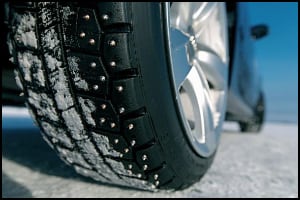
And here’s another thing: in Russia, we have two sets of tyres, depending on the season. The winter and summer tyres. Some winter tyres have studs because it improves the tyre-ground traction. If you don’t have winter tyres in wintertime, it can be only a matter of days before you crash your car – and into some other car, too.
So, if you happen to be in Russia and drive a car during winter, don’t forget to check the tyres!
Driving in Britain

I haven’t driven in Britain since reaching the ripe old age of 70. Having lived abroad since retirement, my subsequent experiences have been limited to hiring a car at a London airport, perhaps twice a year, and heading south to Dorset to visit family.
This involves half an hour on the notoriously busy M25, followed by a seemingly endless struggle along the M3. Fifty-mile-an-hour speed limits, bumper-to-bumper traffic, mile after mile, and all this on a SIX-LANE motorway! An absolute nightmare. An experience I can honestly say I don’t miss one jot.
How different things were when I was learning to drive in the late 1960s. Roads were virtually deserted by comparison, journeys seemed so much more enjoyable, and driving actually felt like a pleasant and relatively carefree experience. Perhaps nostalgia is clouding my memory, but I certainly don’t remember spending half my driving time staring at the rear end of somebody else’s car.
Statistically, British roads remain among the safest in the world, roughly four times safer per capita, for instance, than those in the USA. Our extensive use of roundabouts (do the Americans really call them “circles”?) rather than four-way stop junctions certainly helps maintain traffic flow. British driving standards also rank highly internationally, although you’d be forgiven for thinking otherwise if you listened to the daily complaints about road conditions, congestion and the behaviour of other motorists.
And therein lies the problem. Today’s drivers seem increasingly adept at blaming everybody and everything except themselves. Impatience, inconsideration and, in some cases, sheer incompetence appear to be becoming part of the driving culture. Road rage is very real, sometimes with tragic consequences, while the simple courtesy of allowing another driver to proceed seems to be rapidly disappearing.
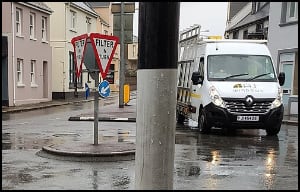
Perhaps we could all learn something from little old Jersey, one of the British Channel Islands, situated about 70 miles south of mainland England, where I spent most of my working life.
Jersey still operates an island-wide speed limit of 40mph, with many of its tiny, winding country lanes restricted to 20mph or even 15mph. But what I particularly admired was its wonderful system of “filter-in-turn” at certain junctions. Quite simply, you allow one vehicle to go ahead of you, then you take your turn. Everyone does the same, and remarkably, it works!
Several years ago, the traffic lights failed at an extremely busy T-junction close to Jersey airport. Delays there had always been considerable. So, what happened when they stopped working?
Nothing particularly dramatic. Drivers simply automatically reverted to the good old “filter-in-turn” system. Traffic flowed beautifully, the delays disappeared, and the failed traffic lights were never ever replaced! Now there’s a lesson in common sense, patience and mutual respect.
Sadly, I suspect that this wonderfully simple, unselfish and ultimately successful approach to driving would stand very little chance of catching on in mainland Britain. Indeed, I’m not sure it would work in many other parts of the world either.
Perhaps the problem isn’t our roads, our traffic lights or even our roundabouts. Perhaps it’s the people behind the steering wheels. And that’s a much harder problem to fix.
Driving in America

Well, this is going to be a, mmm… OK, well, ya see… We don’t drive many actual cars in my country. No really. Example: Ford makes exactly one car, the Mustang (named after the airplane, not the horse). Really, there are no other cars in their line-up. Instead, we drive something called an SUV. SUV is short for Sport Utility Vehicle. What’s that? Think of it like a lorry (truck), that fell in love with a mini-van. Their bouncing, two ton-baby would be an SUV. Seating arrangement like a mini-van, exterior like an enclosed pick-up.
Besides sedans, there’s other stuff we don’t have. Like small cars with three cylinders. I had never seen one before my first trip to Europe. 1.2 litres. Oh, we also don’t have litres, we have cubic inches. I got coke bottles bigger than that. There is no way that thing would make it on an Interstate. That reminds me, if we had kilometers per hour, you would need about 130-140 of them out on the Interstate. We do have indoor plumbing, if that helps.
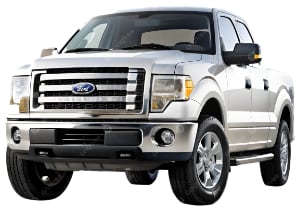
The most popular vehicle on US roads is the Ford F-150. This is a big pick-up truck. It’s much taller than I am; so, they put a small step under the door so you can get into the cab. Really, it’s huge by European standards.
We also don’t have steering wheels on the right-hand side, AND we drive on the wrong side of the road. On purpose.
I’ll tell you a story: When the very first cars were being built, folks were used to driving wagons. The most popular wagon in the UK was the Stage Coach. The driver controlled his team from the right-hand seat.
In the US, the most common wagon was the buckboard. It was driven from the left side. So naturally, folks were used to driving on that side and common sense dictated that’s where the steering wheel needed to go. Former British colonies drive on one side and North Americans drive on the other. So now you know.