

I’m rather fond of the 1920s, during which blues and jazz became established as popular music. Stravinsky, Ravel, and Gershwin rose in popularity, but it was four decades later, with the Beatles, Stones et all, that maybe had an even greater effect on people, particularly the younger generation.
But no; I’m going to plump for a composer so ridiculously talented, and, due to the genre in which he made his mark, one who will probably be remembered for a very long time indeed.

John Williams, the film score writer, is simply unmatched by any of his contemporaries. His amazingly memorable melodies and arrangements are every bit as compelling as the movies for which he composed. Take away his music and replace it with someone else’s and you will weaken and lessen the effect in every case.
I know of orchestral musicians who get as much pleasure out of performing John Williams’ music as they do Mozart, Verdi and Beethoven. Yes, of course he took ideas from other greats like Wagner and Stravinsky, but it was the way he seamlessly weaved the music all together that was unique and at the same time, memorable and inspiring. You don’t get 54 Academy Award norminations unless you are the greatest. (Only Disney has more!)
Already, it’s possible to study his writing methods, with hundreds of online and university courses available. Good luck if you try and emulate him…..
As long as cinema and film-making exists, so will the score-writing genius that is John Williams.
The most influential music of the 20th century

I would like to take a broader approach that is up to the task.
I think that the most influential music of the 20th century is rock’n’roll. Yes, it is a loose term, but it worked as a game-changer, creating a brand new landscape in terms of music taste and, even more, the lifestyle of a whole generation. Let’s recall some of its mottos reflecting the change, like Live Fast, Die Young or Sex, Drugs and Rock’n’roll. Rock’n’roll has brought about the sexual revolution, a 100% cultural phenomenon.
I could mention several iconic characters that have shaken – and changed – the world, though these are just the brightest gems.
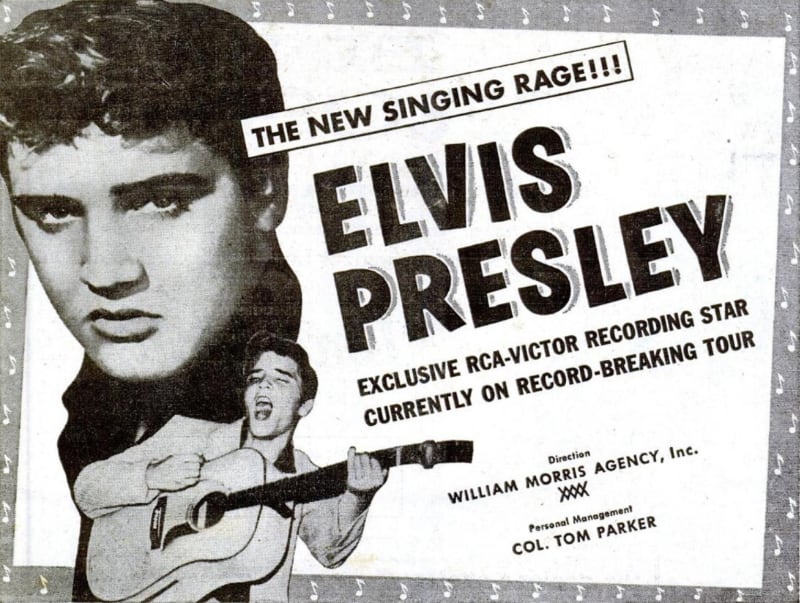
Though not my favourite musically, Elvis Presley is the first on the list. The white boy intruded on the black music world and made the whole of America listen to him. I believe he has become a bridge between previously separated worlds of black music and a much wider white audience.
The Beatles and the Rolling Stones completely changed the landscape in the 1960s. They both started as easy-listening pop bands, but by the second half of the decade, they produced true masterpieces like Eleanor Rigby, While My Guitar Gently Weeps, Something, Paint It Black, and Sympathy for the Devil. Their British invasion simultaneously was changing America – and the whole world – introducing their pioneering music to the global audience, from New York to LA to Tokyo. Even within the Soviet Union, there was a very long-lasting legend that, on their way from Europe to Hong Kong, the Beatles briefly visited the country, stopping at a Moscow airport and probably even delivering an indoor performance. Well, it was just a lovely legend with no proof, reflecting a desire to join the admiration of their music shared by the outside world.
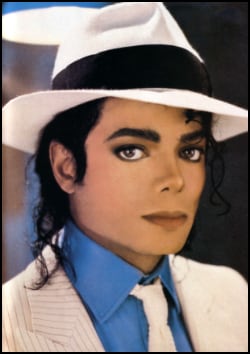
Finally, it was Michael Jackson and his Thriller, inspired by the late great Quincy Jones. Yes, one can argue that we’re talking about pop rather than rock, but the musical impact is of the same scale as the two previous examples. He made a revolution not just in music, setting a trend for many followers; just think of Bruno Mars, for example. It was also a visual change of how to behave on stage. Just think of all these Bollywood movie group dances, taking roots in Michael Jackson’s music video choreography.
Rock’n’roll destroyed the Communism ideology in the Soviet Union, though the authorities have been fiercely fighting it. As a schoolboy, I recall listening to every piece of Western music, from rock to pop. Each piece was another brick in the wall, but, unlike the original story, these bricks were falling off it, raising people’s spirits in their pursuit for freedom and a different way of life. There were dozens of local bands trying to step into the rock’n’roll shoes, performing in Russian and forming a mighty counter-culture within the USSR.
I miss rock’n’roll because it has completed its mission and exists no more.
The most influential music of the Twentieth Century

The idea for this article came from Billboard Magazine. They came out with a list of the top selling songs of the century so far and I just thought it was kinda’ lame. “Blinding Lights” by The Weeknd is the song of the century. Ummm… no.
Plus, we are only a couple of decades in, so double no. We decided to do our picks for the most influential music of the last century and the one I want to tell you about is a song you know, but probably know nothing about.
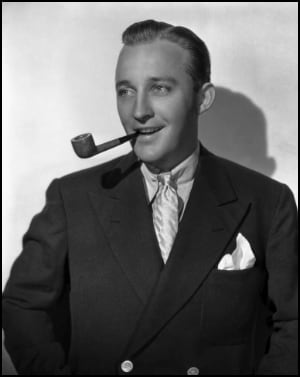
Bing Crosby’s “I’ll be home for Christmas” is my pick. Yes, off the wall but hear me out. The year before Crosby had released “White Christmas” and it was, and remains, the biggest single (45) of all time. The year was 1943 and World War Two was in full swing.
I’ll be home for Christmas, if only in my dreams…
Yes, it’s a Christmas song but just barely. In reality, it’s a powerful wish from a young solder to his family and it touched something deep in a traumatized nation. It was a sort of National Anthem for men in the field and remained on Armed Forces Radio until the following July.
I’ll be home for Christmas
you can plan on me.
Please have snow and mistletoe
and presents on the tree…
No one came home…
In fact, maybe it was a little too poignant. The British High Command was concerned about the effect it could have on the moral of men in the field. It was completely banned from British soldiers.
The next year, the song returned to the charts and rippled through American society for decades. Astronauts Frank Borman and James Lovell requested NASA play it over the radio to their Gemini 7 spacecraft. Como, Sinatra and others recorded their versions. It was later made into a movie. According to the Library of Congress, “I’ll Be Home for Christmas” became the most requested song at Christmas U.S.O. shows in both Europe and the Pacific and Yank, the GI magazine, said Crosby accomplished more for military morale than anyone else of that era.